
Dragon Run
Flowing through Virginia’s Middle Peninsula, Dragon Run is one of the East Coast’s finest remaining blackwater systems. In 2026, Chesapeake Conservancy partnered with Friends of Dragon Run to help conserve more than 650 acres of essential wildlife habitat along this blackwater stream with associated swamps that flows into the Piankatank River and ultimately the Chesapeake Bay. The achievement built on decades of collaborative, landscape-scale conservation in one of the Chesapeake Bay watershed’s most intact natural landscapes.
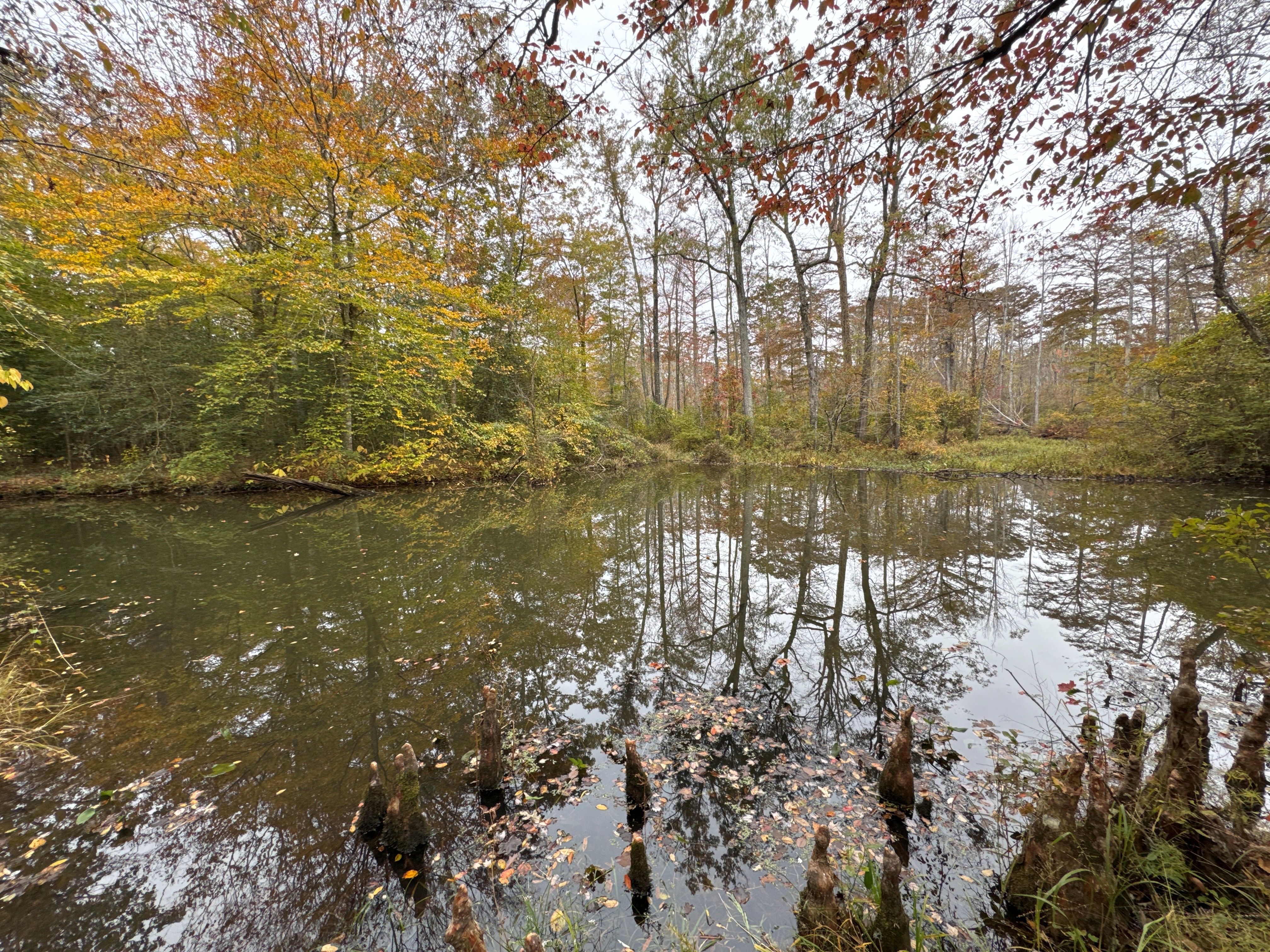
The newly conserved land protects more than 2.5 miles of Dragon Run frontage and approximately 250 acres of bald cypress-tupelo swamp, closing a critical gap in and extending a wildlife corridor within the 90,000-acre Dragon Run watershed. The watershed stretches 40 miles across Virginia’s Middle Peninsula and provides an ecological link, particularly for migratory species, to the Rappahannock River Valley National Wildlife Refuge and the James River National Wildlife Refuge. It is widely regarded as one of the finest remaining examples of non-tidal and tidal blackwater systems on the East Coast.
Dragon Run lies within the ancient homelands of the Pamunkey, Rappahannock and other Indigenous nations, holding deep historical significance for these communities as hunting and fishing grounds. The Dragon was also a battlefield site during Bacon's Rebellion (1676), the first full-scale armed insurrection in English America. According to the report, Mapping the Dragon: An Indigenous History of Bacon’s Rebellion, prepared by the Pamunkey IndianTribe, the Rappahannock Tribe, the Friends of Dragon Run and St. Mary's College of Maryland with support from the National Park Service, Indigenous leaders, most notably Cockacoeske, the Pamunkey weroansqua (leader), drew upon generations of ecological knowledge of the Dragon’s blackwater swamps to draw Bacon's forces away from their towns on the rivers. Native people used the Dragon to delay, confuse and exhaust Bacon's army. Their skill not only served Native goals, but it also bought time for the English government at Jamestown to regroup. This year, 2026, marks the 350th anniversary of Bacon’s Rebellion, underscoring Dragon Run’s enduring role as a place of Indigenous resilience, cultural survival and historical importance.
The Dragon Run watershed supports more than 2,200 species, including over 115 bird species and 55 fish species, and contains five distinct natural communities. Its forests and wetlands are dominated by bald cypress, tupelo and mixed bottomland hardwoods that provide critical wildlife habitat, sequester carbon and help maintain exceptional water quality. Dragon Run is also within the summer range of the federally endangered northern long-eared bat and supports species such as alewife, American shad, spotted turtle, wood thrush, prothonotary warbler, monarch butterfly and American bumblebee.
Funding for the project included $500,000 in support from the National Fish and Wildlife Foundation (NFWF) and U.S. Fish and Wildlife Service Chesapeake Watershed Investments for Landscape Defense (Chesapeake WILD) program and the generous support of private donors.
The property will be part of the Friends of Dragon Run’s conservation land holdings and will be managed to preserve the natural, cultural and scenic values found on the property, as well as for outdoor experiences. More information about opportunities to experience Dragon Run, including place-based experiences such as guided hikes, kayak trips, birding, citizen science and environmental education, can be found at www.dragonrun.org
Feature photo is a trail cam image by Friends of Dragon Run from nearby the conserved property


